

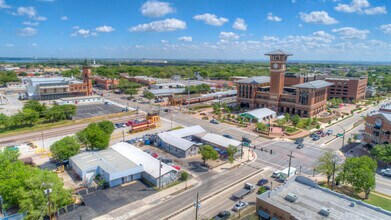
Understand how location drives retail property value and what retail real estate investors prioritize when evaluating commercial real estate deals.
Why Location Still Defines Retail Real Estate Investment Success
Industry data from 2025 shows that over 80% of retail investment performance variation is driven by location factors such as demographics, accessibility, and tenant mix. Even as e-commerce expands, physical retail location continues to determine whether a store thrives or struggles. The adage “location, location, location” remains true—but retail property investors now define it with more precision.
For modern retail investors, understanding traffic patterns, surrounding anchor tenants, and consumer spending trends has become as critical as evaluating rent rolls or lease terms when selecting the best retail locations.
The Core Drivers of Retail Property Location Value
National commercial real estate brokerage data indicates that high-performing retail corridors share three measurable traits: strong population density, convenient accessibility, and durable demand drivers. Industry professionals note that retail centers within a five-minute drive of at least 25,000 residents and average household incomes above $75,000 consistently deliver lower vacancy and stronger tenant retention.
Visibility and ingress/egress play major roles in retail site selection as well. A retail property positioned along a main arterial with traffic counts exceeding 30,000 vehicles per day can outperform similar centers tucked behind secondary roads by as much as 15–20% NOI.
Key Retail Location Factors for Investment Success
| Location Factor | Ideal Metric | Impact on Performance | How to Verify |
| Population Density | 25,000+ within 5-min drive | Lower vacancy, stable rent growth | Census data, demographic reports |
| Household Income | $75,000+ average | Higher spending power, premium tenants | County/MSA income statistics |
| Traffic Count | 30,000+ vehicles/day (ADT) | 15–20% higher valuation & NOI premium vs. secondary roads | State DOT traffic studies |
| Anchor Tenant | National grocery or pharmacy | 25–50 bps tighter cap rates | Lease documentation, credit reports |
| Growth Trajectory | Positive migration trend | Future rent appreciation potential | Metro employment and migration data |
Retail property owners and prospective buyers can explore triple-net properties in comparable locations to see how these metrics align with current market pricing and tenant demand.
Anchor Tenants and Co-Tenancy: The Retail Ecosystem Effect
Commercial real estate brokers report that anchor tenants act as magnets—their sales performance directly influences smaller in-line tenants. Grocery-anchored retail centers remain the gold standard because daily-needs traffic supports cross-shopping. Pharmacies, quick-service restaurants, and discount retailers reinforce steady visit frequency, making these retail locations attractive to 1031 exchange buyers seeking stability.
Licensed CRE professionals indicate that retail centers anchored by national grocers such as Publix, Kroger, or H-E-B in the South can command cap rates 25–50 basis points lower than unanchored properties, which implies higher pricing. This cap rate compression translates to materially higher sale prices for equivalent net operating income.
Understanding Co-Tenancy Risk in Retail Investment
Retail investors must rigorously evaluate co-tenancy clauses. These provisions, designed to protect in-line tenants, can be a major liability for property owners. If a key anchor closes or total occupancy drops below a specific threshold (e.g., 70% of leasable square footage), these clauses can trigger a chain reaction:
Rent Adjustment: The tenant may be allowed to reduce their rent to a lower percentage of gross sales or a fixed, reduced amount.
Lease Termination: In the worst-case scenario, the tenant may have the right to terminate their lease entirely.
Actionable Insight for Retail Investors: The risk is magnified if the property’s anchors own their space (common in older retail centers), as the owner cannot control the re-tenanting process needed to cure the co-tenancy breach. Thoroughly review these clauses during commercial real estate due diligence, as a single anchor loss can severely impact the property’s Net Operating Income (NOI) and ability to refinance or sell.
Demographics, Mobility, and Future Growth in Retail Markets
Commercial real estate market specialists observe that demographic momentum is now as important as static population numbers for retail location selection. Retail investors target metros with high migration and job growth rates because new residents translate to expanding consumer bases. According to 2025 migration data, Texas, Florida, and the Carolinas continue to attract both residents and retailers at a record pace.
In contrast, slower-growth regions are focusing on adaptive reuse—transforming older retail properties into healthcare or service-driven spaces. Both strategies show that mobility and local employment trends directly impact rent durability and tenant renewal probability.
For sellers in growing metros, documenting nearby development pipelines and infrastructure projects can strengthen positioning when preparing to sell your property.
Quantifying Retail Site Performance with Data
Industry professionals note that while intuition still matters in retail real estate, investors increasingly rely on data science to evaluate location potential. Foot traffic analytics, mobile phone tracking, and AI-driven demographic mapping allow buyers to quantify trade areas with precision.
A single-tenant retail store averaging 1,200 daily visits within a five-mile radius of major employers will trade far tighter than a site with half the activity—even if rents are similar. Retail investors also measure “dwell time,” or how long visitors stay in the area, as a predictor of spending power and sales potential.
In our view at 1031tax.com, as well as that of our colleagues, retail assets with strong visibility, stable anchors, and consistent customer traffic continue to outperform in both private and institutional portfolios. Properties that score well across all five location metrics—population, income, traffic, anchors, and growth—typically command cap rates 75–100 basis points tighter than those with mixed characteristics.
Finding the Best Retail Investment Locations
For retail real estate investment, location is quantifiable. The highest-performing retail assets are those that combine strong, measurable data—high population density, excellent traffic counts, and stable anchor tenants—with compelling future growth trajectories. Retail properties scoring well across these metrics typically command cap rates 75–100 basis points tighter than those with mixed characteristics.
To secure a top valuation or target an optimal retail acquisition, you need a data-backed strategy. At 1031tax.com, our team are retail property experts who can help you buy or sell any type of retail asset, providing precise site performance analysis and a tailored marketing or acquisition plan.
