

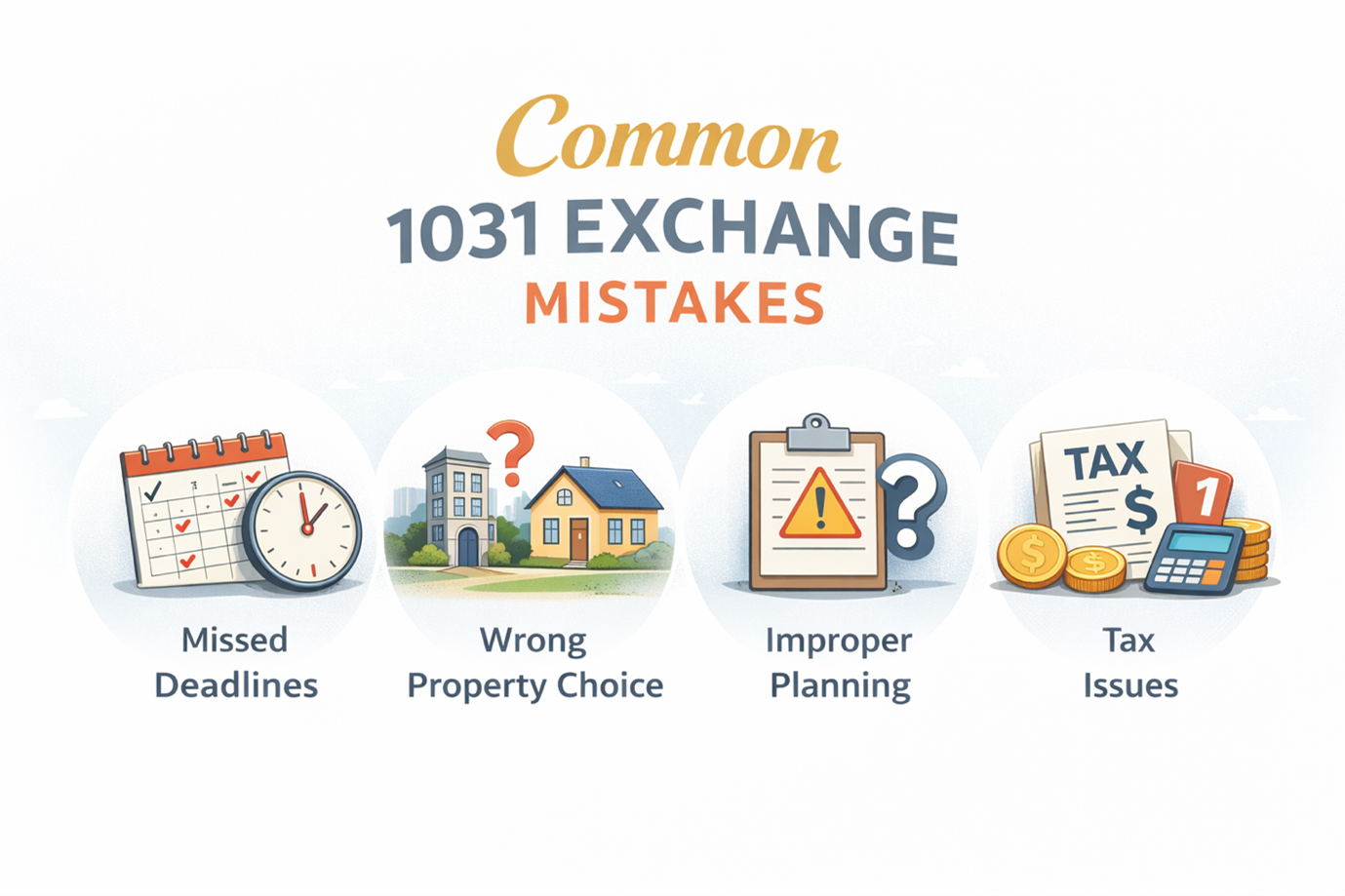
How Pre-Sale Planning Can Save Your Exchange
The most costly 1031 exchange mistakes happen before a property is ever listed. Property owners who wait until closing to think about tax strategy face unnecessary risks, missed opportunities, and rushed decisions that undermine long term financial goals.
Understanding common pre-sale errors helps sellers plan properly and preserve tax deferral benefits. A successful exchange begins well before the first offer is received.
Listing Without Consulting a Qualified Intermediary
One of the most significant 1031 exchange mistakes sellers make is listing a property without consulting a qualified intermediary. IRS rules require that sellers never touch the sale proceeds. If funds go directly to the seller at closing, the exchange is disqualified permanently.
A qualified intermediary must be engaged before closing to hold proceeds and facilitate the exchange. Planning ahead ensures the sale contract includes appropriate exchange language. Attempting to add these provisions after a contract is signed creates unnecessary complications and delays.
Underestimating Identification and Closing Deadlines
A 1031 exchange operates on strict timelines. Sellers have 45 days to identify replacement properties and 180 days to close. Missing either deadline results in immediate capital gains taxation on the full sale amount.
One of the most common 1031 exchange errors sellers make is underestimating how difficult it is to find suitable properties within these timeframes. Market conditions, financing delays, and property availability all affect whether a replacement can be secured in time.
Starting the search early reduces stress and improves decisions. Identifying multiple replacement properties provides flexibility if one falls through. The IRS allows identification of up to three properties regardless of value, which reduces risk significantly.
Assuming Any Real Estate Qualifies as Like-Kind
Not all real estate qualifies as like kind under IRS guidelines. Investment property must be held for business or investment purposes, not personal use. Primary residences and vacation homes used primarily for personal enjoyment typically do not qualify.
U.S. real property must be exchanged for other U.S. real property. Foreign real estate does not qualify as like kind with domestic property. Development land held primarily for resale may also be excluded if the IRS determines it was held as inventory rather than investment.
Understanding these distinctions before listing prevents wasted time and ensures compliance with IRS requirements.
Ignoring Debt Replacement Requirements
One of the most overlooked 1031 exchange pitfalls involves debt replacement. To fully defer capital gains taxes, the replacement property must have equal or greater value and debt than the relinquished property. If debt is reduced, that reduction becomes taxable.
For example, retiring a $300,000 loan while taking only $200,000 in new financing creates $100,000 in taxable boot. Boot is any non like kind property received in an exchange, including cash or debt relief, and it triggers capital gains taxes on that portion.
This often surprises sellers who did not plan for the financing structure in advance. Working with a qualified intermediary and tax advisor ensures proper planning to avoid unintended tax liability.
Waiting Until After Closing to Develop a Strategy
Many sellers approach a 1031 exchange without a clear strategy. They assume replacement properties will become available after closing and that decisions can be made quickly under pressure. This mindset leads to poor investment choices and missed opportunities.
A tax deferral strategy should be developed before listing. Sellers should know their investment objectives, preferred property types, and financing options in advance. This preparation allows them to act decisively when the right opportunity appears.
Single tenant net lease properties are often favored because they offer predictable cash flow, long term leases, and minimal management responsibilities. Consulting with an experienced advisor early ensures better outcomes and avoids rushed decisions.
The Cost of 1031 Exchange Rules Mistakes
The consequences of 1031 exchange rules mistakes are significant. Sellers who fail to follow IRS requirements face immediate capital gains taxes on the full sale amount. Depending on the size of the transaction and tax bracket, this could mean losing hundreds of thousands of dollars in deferred taxes.
Beyond the financial impact, failed exchanges disrupt long term investment strategies. Sellers who planned to reinvest full proceeds into larger properties are forced to purchase smaller assets after paying taxes. This reduces portfolio growth and limits future cash flow potential.
These 1031 exchange risks are avoidable through proper planning, early consultation with a qualified intermediary, and a clear understanding of IRS requirements.
Start Your Exchange the Right Way
Avoiding these common mistakes requires preparation, expertise, and access to quality replacement properties. Sellers who plan ahead and work with experienced advisors position themselves for successful exchanges and stronger investment outcomes.
At 1031tax.com, we specialize in helping property owners execute 1031 exchanges and acquire single tenant net lease properties with strong national tenants. We focus on NNN investments that provide predictable cash flow, minimal management responsibility, and long term lease stability. Whether you are selling apartments, retail centers, or office buildings, we guide you through the exchange process.
Do not let pre-sale mistakes jeopardize your tax deferral strategy. Visit https://1031tax.com today to explore available NNN properties and learn how we can help you execute a successful 1031 exchange.
